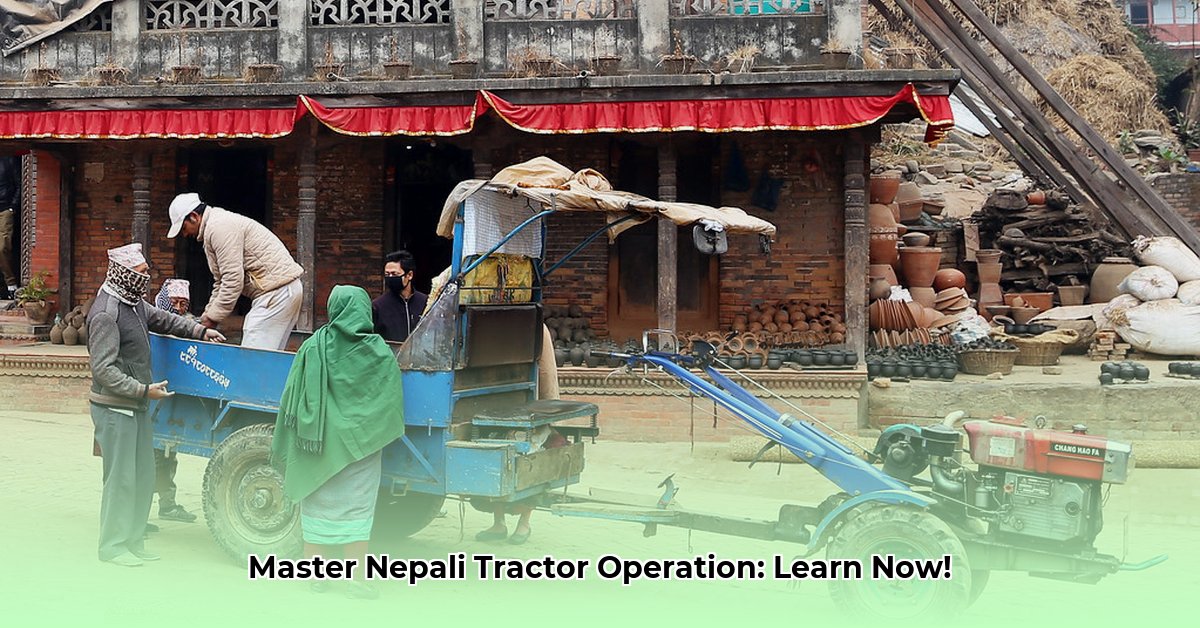
Learning the Nepali language related to tractors is key for farmers and anyone involved in Nepali agriculture. This comprehensive guide will equip you with the essential vocabulary and phrases, making communication smoother and more efficient. Whether you're buying, selling, repairing, or simply discussing tractors, this guide will empower you to speak the language of Nepali farming.
Understanding the Nepali Word for "Tractor"
The most common Nepali word for "tractor" is ट्र्याक्टर (trakator). This is a loanword directly from English and is widely understood throughout Nepal, making it a safe bet in most situations. While slight pronunciation variations may exist across different regions, the core meaning remains consistent. Remember, effective communication often trumps strict adherence to a single pronunciation.
Different Types of Tractors and Their Nepali Names
Tractors aren't one-size-fits-all; they vary in size and power, suited for different farming needs. Larger, more powerful tractors used for plowing vast fields are often called ठूला ट्र्याक्टर (thula trakator), meaning "big tractors." Smaller, more maneuverable tractors, ideal for smaller farms and intricate work, are typically called साना ट्र्याक्टर (sana trakator), translating to "small tractors." Keep in mind that specific brand names and models may influence local terminology, but size distinctions remain a reliable indicator.
Essential Tractor Parts and Actions: Nepali Terminology
This section provides crucial terms for discussing tractor parts, maintenance, and transactions. Mastering this terminology will significantly improve your ability to communicate effectively.
| Nepali Term | English Translation | Usage Example |
|---|---|---|
| प्लो (plo) | Plow | प्लो जोत्ने (plo jotne) - to plow the field with a plow |
| टायर (tyar) | Tire | टायर फुस्केको छ (tyar phuskeko chha) - The tire is flat. |
| इन्जिन (injina) | Engine | इन्जिन बिग्रियो (injina bigriyo) - The engine broke down. |
| गियर (gear) | Gear | गियर परिवर्तन गर्नुहोस् (gear parivartan garnuhos) - Change gears. |
| जोत्ने (jotne) | To plow | ट्र्याक्टरले जमिन जोत्छ (trakatorle jamin jotchha) - The tractor plows the land. |
| मर्मत (marmat) | Repair | ट्र्याक्टरको मर्मत गर्नुहोस् (trakator ko marmat garnuhos) - Repair the tractor. |
| खरिद (kharid) | Purchase | ट्र्याक्टर खरिद गर्नुहोस् (trakator kharid garnuhos) - Buy a tractor. |
| बिक्री (bikri) | Sale | ट्र्याक्टर बिक्री गर्नुहोस् (trakator bikri garnuhos) - Sell a tractor. |
| डिजेल (diesel) | Diesel fuel | डिजेल सकियो (diesel sakio) - The diesel fuel is finished. |
| ब्रेक (brake) | Brake | ब्रेक लगाउनुहोस् (brake lagauhunus) – Apply the brakes. |
This is just a starting point; many more terms await discovery as you delve deeper into the world of Nepali tractor terminology!
The Tractor's Impact on Nepali Farming Culture
Before the introduction of tractors, Nepali farming relied heavily on manual labor and traditional methods. The arrival of tractors marked a profound shift toward modernization, significantly impacting farming practices and overall efficiency. This technological leap had far-reaching effects, influencing not only agricultural productivity but also the social fabric of rural communities. The cultural impact of this transformation is a subject worthy of further exploration. Have you considered the effect on traditional farming skills?
Using Your Nepali Tractor Knowledge: Real-World Scenarios
Let's apply your newfound vocabulary! Imagine negotiating the price of a tractor at a market. You might ask, "यो ट्र्याक्टरको मूल्य कति हो?" (Yo trakator ko mulya kati ho?) – "How much is this tractor?" Or, if repairs are needed, you could inquire, "यो ट्र्याक्टर मर्मत गर्न कति पर्छ?" (Yo trakator marmat garnu katima parcha?) – "How much does it cost to repair this tractor?" Confidently using these phrases will greatly enhance your interactions within the agricultural community.
Exploring Regional Variations: A Deeper Dive
While trakator serves as the primary term, minor regional variations may exist, reflecting the linguistic diversity of Nepal. These subtle differences highlight the rich tapestry of Nepali dialects and their connection to local farming traditions. Further research is needed to fully understand and document the extent of this regional variation.
Continuing Your Tractor Learning Journey
This guide offers a foundational understanding of Nepali tractor terminology. Remember, language is dynamic; new terms continually emerge with technological advancements. Embrace continuous learning to expand your vocabulary and stay informed about the evolving language of Nepali agriculture. Regular engagement with local farmers and mechanics is incredibly valuable for expanding your knowledge base.
Key Takeaways:
- This guide provides a practical vocabulary for Nepali tractor terminology, essential for farmers and anyone within the Nepali agriculture sector.
- We've explored various tractor types and their related terms, encompassing parts and actions.
- The guide illuminated the cultural significance of tractors in Nepal and their impact on rural life.